
TML CLASSICS: Most Widely Read — A 2014 Favorite, Reposted
“Emancipate yourselves from mental slavery; none but ourselves can free our minds” said Pan-Africanist orator Marcus Garvey in October 1937, while delivering a speech in Nova Scotia.
Infused by unconventionality and inspired by Garvey, 43 years later Reggae Legend Bob Marley would echo these same words in the lyrical birth of Redemption Song, an acoustic masterpiece of sheer deliverance.
More than 300 years prior to both trailblazers, no podiums, drums, acoustic guitars, echoplex or hymnbooks were used to deliver messages so meaningful among the slaves; just echoes of surging, melismatic melodies punctuated with low tempos and ecstatic chants expressing hopefulness – and distress. These were the spirituals sung by the African slaves of the 17th, 18th and early 19th centuries. Their optimism traveled with them, religiously, through west-central Africa to the Caribbean, South America, and British North America, all the way to the Underground Railroad. By 1860, eighty-nine percent of the nation’s African Americans were slaves; blacks formed 13 percent of the country’s population and 33 percent of the South’s population.
The scale of the transatlantic slave trade was staggering. In the early 18th century, approximately 36,000 Africans were exported each year, but by the 1780s, that number had surged to nearly 80,000 annually. Historians estimate that between thirty and sixty million Africans were forced into this brutal triangular trade system, yet only a fraction—perhaps one-third, if that—survived the horrific journey and its aftermath. Nowhere else in recorded history has a people endured such prolonged, systematic, and dehumanizing suffering as Africans during the Atlantic Slave Trade.
On September 22, 1862, President Abraham Lincoln stood at the precipice of history, pen in hand, and declared a reckoning with a nation’s greatest sin. With the preliminary proclamation, he set forth an order: by January 1, 1863, all enslaved souls held in rebellion-bound states would be free. The words were bold, but the cost was steep.
The Emancipation Proclamation (1863) rippled across a fractured nation. White Southerners trembled, fearing a reckoning they had long denied; Northern Democrats raged; abolitionists breathed fire and hope into their cause; and distant European powers withdrew their gaze from aiding the Confederacy. It was not the end of slavery, but a turning of the tide—a torch lit in the darkness, illuminating the possibility of freedom.
For millions of African Americans, both shackled and free, Lincoln’s decree was more than law—it was a whisper of salvation, a promise that liberty could yet be reclaimed. And yet, history moves slowly. Nearly two long years would pass before freedom’s breath reached every corner. On June 19, 1865, Union soldiers sailed into Galveston, Texas, carrying an order that echoed like thunder across generations: the last quarter-million enslaved people were free at last. That day became Juneteenth—a day carved into memory, a testament to survival, and a song of hope rising from the weight of centuries.
One hundred years later in 1962, during the Civil Rights Era and trailing Lincoln’s stroke of the pen, Dr. Martin Luther King, Jr. would reference the Emancipation Proclamation by placing it alongside the Declaration of Independence as an “imperishable contribution to civilization.” He lamented it despite a history where America “proudly professed the basic principles inherent in both documents, it sadly practiced the antithesis of these principles.”
He concluded, “There is but one way to commemorate the Emancipation Proclamation. That is to make its declarations of freedom real; to reach back to the origins of our nation when our message of equality electrified an unfree world, and reaffirm democracy by deeds as bold and daring as the issuance of the Emancipation Proclamation. “
Shortly thereafter, Dr. King formulated the evolution known as the 1963 March on Washington for Jobs and Freedom (often referred to as the “I Have a Dream” speech) where he gave this most famous invocation of the Emancipation Proclamation while standing on the front steps of the Lincoln Memorial.
And yet, after centuries of declarations, doctrines, and decrees—etched in parchment and carved into stone—we must ask: what does it truly mean to be free? We seek liberation in many forms: in voice, in becoming, in choosing, in belonging. But beneath them all lies the deepest yearning, the quiet, untamed hunger for freedom within the mind.
For just as the body can be shackled, so too can thought be imprisoned. This captivity is not only born in cells of concrete and steel, but in the silent confines of our own conditioned existence. There are those who walk unbound, yet carry invisible chains—bound by limitation, by fear, by the echoes of a mis-education that narrows their sight and stifles their becoming.
True emancipation demands more than the breaking of iron; it calls for the unbinding of consciousness itself. Until the mind is unshackled, freedom remains an illusion dressed in borrowed light.
During the early nineteenth century, enslaved people often sought mental and spiritual freedom through religious chants, moans, ring shouts, and communal celebrations. Though their bodies were bound, these sacred expressions carried profound meaning, offering both comfort and resistance. The spirituals were more than songs—they were coded messages of hope, survival, and faith, guiding them through suffering and pointing toward deliverance. Within the layered lyrics, they found strength, a sense of unity, and the promise that salvation—whether spiritual or earthly—was on its way. These songs became a source of resilience, preserving the belief that freedom, in some form, was inevitable.
“I looked over Jordan and what did I see/ Coming for to carry me home/ A band of angels coming after me/ coming for to carry me home” a verse from “Sweet Low, Sweet Chariot” and a song of the Underground Railroad that helped the fugitives to rely on one another.
Other hymns such as, “There is a Balm in Gilead” soothed their souls and made way for healing. Many of melodies did not appear in any journals until the 1867 publication of “Slave Songs of The United States”, a book written by Allen, Ware, Garrison. When the Civil Rights era approached in the 1960s, Negro spirituals emerged such as “We Shall Overcome”, “Oh Freedom” and “This Little Light of Mine.” When I pull the acoustic strings in my mind, I can feel the reverberation of my people and my country–past and present.
Slaves of the 17th, 18th, and 19th centuries endured countless journeys seared in the flames of withering injustice. Though many remained chained and even more died senselessly, others were able to eventually find an escape within the boundless worlds of their own imaginations. And though slavery is no longer legal anywhere in the world, human trafficking remains an international problem and an estimated 29.8 million people are living in illegal slavery today.
The journey to redemption has been elongated, but still, WE RISE.
Today, Juneteenth stands as both a solemn remembrance of a painful past and a powerful declaration of purpose for the journey ahead. Recognized as the oldest nationally celebrated commemoration of the end of slavery in the United States, it marks a pivotal moment in American history. Originating in Galveston, Texas, in 1865, the observance of June 19th as African American Emancipation Day has since expanded across the nation and beyond, honoring the resilience, survival, and enduring pursuit of freedom.
Juneteenth is more than a day—it’s a living culture, a week, a month, and a movement dedicated to commemorating African American freedom. At its core, it carries the weight of education, empowerment, achievement, and progression, celebrating not just where we’ve been, but where we’re going. Since its inception, Juneteenth has been marked by public forums, powerful speaking engagements, festivals, and family gatherings that keep our stories alive. It is a reflective time in the history of Black America—a space to honor resilience, assess where we stand, and reimagine where we’re headed. Today, people of all ethnicities, faiths, and nationalities come together to acknowledge a chapter of history that must never be forgotten, while carrying forward its call for justice, unity, and collective liberation.
Freedom is a popular term used in the Land of the Free. What is not popular is the knowledge of how to truly be free. From Bob Marley to Johnny Cash, Brooke Hogan, Switchfoot, and Muse, the world is whistling about redemption of the mind, body, and soul; for there is no greater love – than freedom.
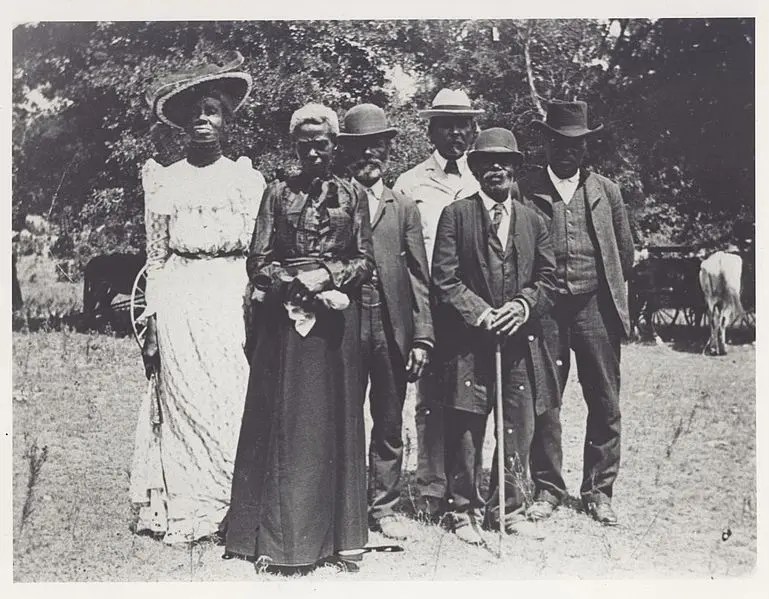
In 1930, the first Juneteenth celebration was held at Rosewood Park. On January 1, 1980, the bill was passed making “Juneteenth” an official state holiday.
Shall we never forget these songs of freedom.
“Nobody’s free until everybody’s free.” ~ Fannie Lou Hamer
love and enlightenment for your freedom!
